二叉搜索树 二叉树 广度优先搜索 树 深度优先搜索
题目描述 给定一棵 二叉搜索树(BST) 的根结点 root 和一个整数 level。
根节点位于第 0 层。每一层代表与根节点的距离。
返回给定 level 中所有节点值的中位数。如果该层不存在或没有节点,则返回 -1。
中位数 定义为将该层的值按 非降序 排序后中间的元素。如果该层的值的数量为偶数,则返回 向上 中位数(排序后两个中间元素中较大的那个)。
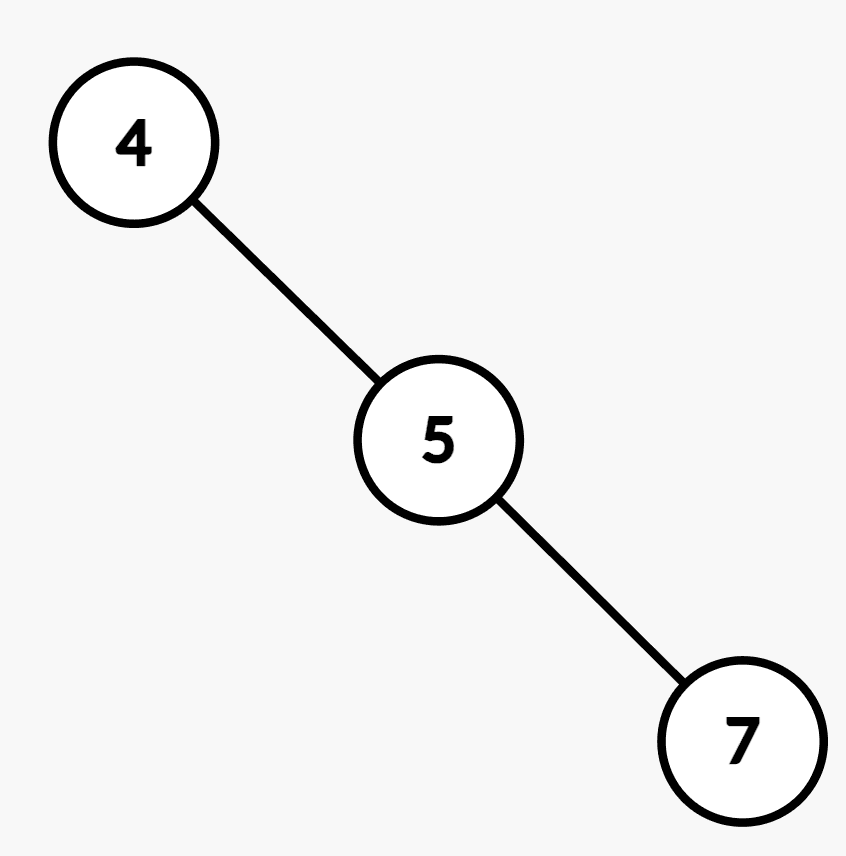
示例 1:
输入: root = [4,null,5,null,7], level = 2
输出: 7
解释:
位于 level = 2 的节点是 [7]。中位数是 7。
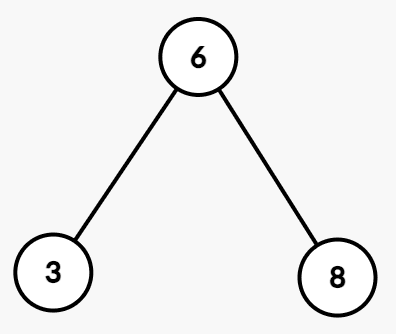
示例 2:
输入: root = [6,3,8], level = 1
输出: 8
解释:
位于 level = 1 的节点是 [3, 8]。有两个可能的中位数,因此较大的那个 8 是答案。
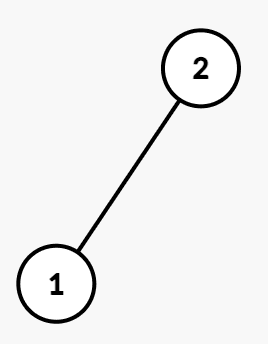
示例 3:
输入: root = [2,1], level = 2
输出: -1
解释:
在 level = 2 没有节点,所以答案是 -1。
提示:
树中节点的数量在 [1, 2 * 105 ] 范围内。 1 <= Node.val <= 106 0 <= level <= 2 * 105 解法 方法一:DFS 我们注意到,题目要求我们找到二叉搜索树中某一层的节点值的中位数。由于中位数的定义是将节点值排序后取中间的值,而二叉搜索树的中序遍历本身就是有序的,因此我们可以通过中序遍历来收集指定层级的节点值。
我们定义一个辅助函数 \(\text{dfs}(root, i)\) ,其中 \(root\) 是当前节点,而 \(i\) 是当前节点的层级。在函数中,如果当前节点为空,则直接返回。否则,我们递归地遍历左子树,检查当前节点的层级是否等于目标层级,如果是,则将当前节点的值加入结果列表中,最后递归地遍历右子树。
我们初始化一个空列表 \(\text{nums}\) 来存储指定层级的节点值,并调用 \(\text{dfs}(root, 0)\) 来开始遍历。最后,我们检查 \(\text{nums}\) 是否为空,如果为空则返回 -1,否则返回 \(\text{nums}\) 中间位置的值。
时间复杂度 \(O(n)\) ,空间复杂度 \(O(n)\) ,其中 \(n\) 是树中节点的数量。
Python3 Java C++ Go TypeScript
 1
 2
 3
 4
 5
 6
 7
 8
 9
10
11
12
13
14
15
16
17
18
19
# Definition for a binary tree node.
# class TreeNode:
# def __init__(self, val=0, left=None, right=None):
# self.val = val
# self.left = left
# self.right = right
class Solution :
def levelMedian ( self , root : Optional [ TreeNode ], level : int ) -> int :
def dfs ( root : Optional [ TreeNode ], i : int ):
if root is None :
return
dfs ( root . left , i + 1 )
if i == level :
nums . append ( root . val )
dfs ( root . right , i + 1 )
nums = []
dfs ( root , 0 )
return nums [ len ( nums ) // 2 ] if nums else - 1
 1
 2
 3
 4
 5
 6
 7
 8
 9
10
11
12
13
14
15
16
17
18
19
20
21
22
23
24
25
26
27
28
29
30
31
32
33
34
35
36
/**
* Definition for a binary tree node.
* public class TreeNode {
* int val;
* TreeNode left;
* TreeNode right;
* TreeNode() {}
* TreeNode(int val) { this.val = val; }
* TreeNode(int val, TreeNode left, TreeNode right) {
* this.val = val;
* this.left = left;
* this.right = right;
* }
* }
*/
class Solution {
private List < Integer > nums = new ArrayList <> ();
private int level ;
public int levelMedian ( TreeNode root , int level ) {
this . level = level ;
dfs ( root , 0 );
return nums . isEmpty () ? - 1 : nums . get ( nums . size () / 2 );
}
private void dfs ( TreeNode root , int i ) {
if ( root == null ) {
return ;
}
dfs ( root . left , i + 1 );
if ( i == level ) {
nums . add ( root . val );
}
dfs ( root . right , i + 1 );
}
}
 1
 2
 3
 4
 5
 6
 7
 8
 9
10
11
12
13
14
15
16
17
18
19
20
21
22
23
24
25
26
27
28
29
30
31
/**
* Definition for a binary tree node.
* struct TreeNode {
* int val;
* TreeNode *left;
* TreeNode *right;
* TreeNode() : val(0), left(nullptr), right(nullptr) {}
* TreeNode(int x) : val(x), left(nullptr), right(nullptr) {}
* TreeNode(int x, TreeNode *left, TreeNode *right) : val(x), left(left), right(right) {}
* };
*/
class Solution {
public :
int levelMedian ( TreeNode * root , int level ) {
vector < int > nums ;
auto dfs = [ & ]( this auto && dfs , TreeNode * node , int i ) -> void {
if ( ! node ) {
return ;
}
dfs ( node -> left , i + 1 );
if ( i == level ) {
nums . push_back ( node -> val );
}
dfs ( node -> right , i + 1 );
};
dfs ( root , 0 );
return nums . empty () ? -1 : nums [ nums . size () / 2 ];
}
};
 1
 2
 3
 4
 5
 6
 7
 8
 9
10
11
12
13
14
15
16
17
18
19
20
21
22
23
24
25
26
27
28
29
/**
* Definition for a binary tree node.
* type TreeNode struct {
* Val int
* Left *TreeNode
* Right *TreeNode
* }
*/
func levelMedian ( root * TreeNode , level int ) int {
nums := make ([] int , 0 )
var dfs func ( * TreeNode , int )
dfs = func ( node * TreeNode , i int ) {
if node == nil {
return
}
dfs ( node . Left , i + 1 )
if i == level {
nums = append ( nums , node . Val )
}
dfs ( node . Right , i + 1 )
}
dfs ( root , 0 )
if len ( nums ) == 0 {
return - 1
}
return nums [ len ( nums ) / 2 ]
}
 1
 2
 3
 4
 5
 6
 7
 8
 9
10
11
12
13
14
15
16
17
18
19
20
21
22
23
24
25
26
27
28
29
30
31
32
33
/**
* Definition for a binary tree node.
* class TreeNode {
* val: number
* left: TreeNode | null
* right: TreeNode | null
* constructor(val?: number, left?: TreeNode | null, right?: TreeNode | null) {
* this.val = (val===undefined ? 0 : val)
* this.left = (left===undefined ? null : left)
* this.right = (right===undefined ? null : right)
* }
* }
*/
function levelMedian ( root : TreeNode | null , level : number ) : number {
const nums : number [] = [];
const dfs = ( node : TreeNode | null , i : number ) : void => {
if ( node === null ) {
return ;
}
dfs ( node . left , i + 1 );
if ( i === level ) {
nums . push ( node . val );
}
dfs ( node . right , i + 1 );
};
dfs ( root , 0 );
if ( nums . length === 0 ) {
return - 1 ;
}
return nums [ nums . length >> 1 ];
}
GitHub