二叉树 分治 单调栈 数组 栈 树 难度 中等
题目描述 给定一个不重复的整数数组 nums 。 最大二叉树 可以用下面的算法从 nums 递归地构建:
创建一个根节点,其值为 nums 中的最大值。 递归地在最大值 左边 的 子数组前缀上 构建左子树。 递归地在最大值 右边 的 子数组后缀上 构建右子树。 返回 nums 构建的 最大二叉树
示例 1:
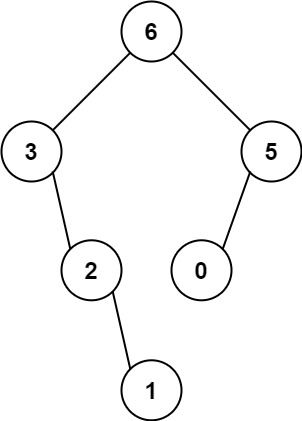
输入: nums = [3,2,1,6,0,5]
输出: [6,3,5,null,2,0,null,null,1]
解释: 递归调用如下所示:
- [3,2,1,6,0,5] 中的最大值是 6 ,左边部分是 [3,2,1] ,右边部分是 [0,5] 。
- [3,2,1] 中的最大值是 3 ,左边部分是 [] ,右边部分是 [2,1] 。
- 空数组,无子节点。
- [2,1] 中的最大值是 2 ,左边部分是 [] ,右边部分是 [1] 。
- 空数组,无子节点。
- 只有一个元素,所以子节点是一个值为 1 的节点。
- [0,5] 中的最大值是 5 ,左边部分是 [0] ,右边部分是 [] 。
- 只有一个元素,所以子节点是一个值为 0 的节点。
- 空数组,无子节点。
示例 2:
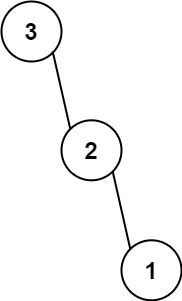
输入: nums = [3,2,1]
输出: [3,null,2,null,1]
提示:
1 <= nums.length <= 10000 <= nums[i] <= 1000nums 中的所有整数 互不相同 解法 方法一:递归 思考
根是区间最大值,左右递归同一规则。每次线性找最大值,最坏 \(O(n^2)\) ,但 \(n\le 10^3\) 可通过。
对当前数组取 max 与下标,切开左右再递归即可对应定义。
先找到数组 \(nums\) 的最大元素所在的位置 \(i\) ,将 \(nums[i]\) 作为根节点,然后递归左右两侧的子数组,构建左右子树。
时间复杂度 \(O(n^2)\) ,空间复杂度 \(O(n)\) ,其中 \(n\) 是数组的长度。
Python3 Java C++ Go TypeScript Rust C
 1
 2
 3
 4
 5
 6
 7
 8
 9
10
11
12
13
14
15
16
17
18
19
# Definition for a binary tree node.
# class TreeNode:
# def __init__(self, val=0, left=None, right=None):
# self.val = val
# self.left = left
# self.right = right
class Solution :
def constructMaximumBinaryTree ( self , nums : List [ int ]) -> Optional [ TreeNode ]:
def dfs ( nums ):
if not nums :
return None
val = max ( nums )
i = nums . index ( val )
root = TreeNode ( val )
root . left = dfs ( nums [: i ])
root . right = dfs ( nums [ i + 1 :])
return root
return dfs ( nums )
 1
 2
 3
 4
 5
 6
 7
 8
 9
10
11
12
13
14
15
16
17
18
19
20
21
22
23
24
25
26
27
28
29
30
31
32
33
34
35
36
37
38
39
/**
* Definition for a binary tree node.
* public class TreeNode {
* int val;
* TreeNode left;
* TreeNode right;
* TreeNode() {}
* TreeNode(int val) { this.val = val; }
* TreeNode(int val, TreeNode left, TreeNode right) {
* this.val = val;
* this.left = left;
* this.right = right;
* }
* }
*/
class Solution {
private int [] nums ;
public TreeNode constructMaximumBinaryTree ( int [] nums ) {
this . nums = nums ;
return dfs ( 0 , nums . length - 1 );
}
private TreeNode dfs ( int l , int r ) {
if ( l > r ) {
return null ;
}
int i = l ;
for ( int j = l ; j <= r ; ++ j ) {
if ( nums [ i ] < nums [ j ] ) {
i = j ;
}
}
TreeNode root = new TreeNode ( nums [ i ] );
root . left = dfs ( l , i - 1 );
root . right = dfs ( i + 1 , r );
return root ;
}
}
 1
 2
 3
 4
 5
 6
 7
 8
 9
10
11
12
13
14
15
16
17
18
19
20
21
22
23
24
25
26
27
28
29
30
31
/**
* Definition for a binary tree node.
* struct TreeNode {
* int val;
* TreeNode *left;
* TreeNode *right;
* TreeNode() : val(0), left(nullptr), right(nullptr) {}
* TreeNode(int x) : val(x), left(nullptr), right(nullptr) {}
* TreeNode(int x, TreeNode *left, TreeNode *right) : val(x), left(left), right(right) {}
* };
*/
class Solution {
public :
TreeNode * constructMaximumBinaryTree ( vector < int >& nums ) {
return dfs ( nums , 0 , nums . size () - 1 );
}
TreeNode * dfs ( vector < int >& nums , int l , int r ) {
if ( l > r ) return nullptr ;
int i = l ;
for ( int j = l ; j <= r ; ++ j ) {
if ( nums [ i ] < nums [ j ]) {
i = j ;
}
}
TreeNode * root = new TreeNode ( nums [ i ]);
root -> left = dfs ( nums , l , i - 1 );
root -> right = dfs ( nums , i + 1 , r );
return root ;
}
};
 1
 2
 3
 4
 5
 6
 7
 8
 9
10
11
12
13
14
15
16
17
18
19
20
21
22
23
24
25
26
27
/**
* Definition for a binary tree node.
* type TreeNode struct {
* Val int
* Left *TreeNode
* Right *TreeNode
* }
*/
func constructMaximumBinaryTree ( nums [] int ) * TreeNode {
var dfs func ( l , r int ) * TreeNode
dfs = func ( l , r int ) * TreeNode {
if l > r {
return nil
}
i := l
for j := l ; j <= r ; j ++ {
if nums [ i ] < nums [ j ] {
i = j
}
}
root := & TreeNode { Val : nums [ i ]}
root . Left = dfs ( l , i - 1 )
root . Right = dfs ( i + 1 , r )
return root
}
return dfs ( 0 , len ( nums ) - 1 )
}
 1
 2
 3
 4
 5
 6
 7
 8
 9
10
11
12
13
14
15
16
17
18
19
20
21
22
23
24
25
26
/**
* Definition for a binary tree node.
* class TreeNode {
* val: number
* left: TreeNode | null
* right: TreeNode | null
* constructor(val?: number, left?: TreeNode | null, right?: TreeNode | null) {
* this.val = (val===undefined ? 0 : val)
* this.left = (left===undefined ? null : left)
* this.right = (right===undefined ? null : right)
* }
* }
*/
function constructMaximumBinaryTree ( nums : number []) : TreeNode | null {
const n = nums . length ;
if ( n === 0 ) {
return null ;
}
const [ val , i ] = nums . reduce (( r , v , i ) => ( r [ 0 ] < v ? [ v , i ] : r ), [ - 1 , 0 ]);
return new TreeNode (
val ,
constructMaximumBinaryTree ( nums . slice ( 0 , i )),
constructMaximumBinaryTree ( nums . slice ( i + 1 )),
);
}
 1
 2
 3
 4
 5
 6
 7
 8
 9
10
11
12
13
14
15
16
17
18
19
20
21
22
23
24
25
26
27
28
29
30
31
32
33
34
35
36
37
38
39
40
41
42
43
44
// Definition for a binary tree node.
// #[derive(Debug, PartialEq, Eq)]
// pub struct TreeNode {
// pub val: i32,
// pub left: Option<Rc<RefCell<TreeNode>>>,
// pub right: Option<Rc<RefCell<TreeNode>>>,
// }
//
// impl TreeNode {
// #[inline]
// pub fn new(val: i32) -> Self {
// TreeNode {
// val,
// left: None,
// right: None
// }
// }
// }
use std :: cell :: RefCell ;
use std :: rc :: Rc ;
impl Solution {
fn construct ( nums : & Vec < i32 > , start : usize , end : usize ) -> Option < Rc < RefCell < TreeNode >>> {
if start >= end {
return None ;
}
let mut idx = 0 ;
let mut max_val = - 1 ;
for i in start .. end {
if nums [ i ] > max_val {
idx = i ;
max_val = nums [ i ];
}
}
Some ( Rc :: new ( RefCell :: new ( TreeNode {
val : max_val ,
left : Self :: construct ( nums , start , idx ),
right : Self :: construct ( nums , idx + 1 , end ),
})))
}
pub fn construct_maximum_binary_tree ( nums : Vec < i32 > ) -> Option < Rc < RefCell < TreeNode >>> {
Self :: construct ( & nums , 0 , nums . len ())
}
}
 1
 2
 3
 4
 5
 6
 7
 8
 9
10
11
12
13
14
15
16
17
18
19
20
21
22
23
24
25
26
27
28
29
30
31
/**
* Definition for a binary tree node.
* struct TreeNode {
* int val;
* struct TreeNode *left;
* struct TreeNode *right;
* };
*/
struct TreeNode * construct ( int * nums , int start , int end ) {
if ( start >= end ) {
return NULL ;
}
int idx = 0 ;
int maxVal = -1 ;
for ( int i = start ; i < end ; i ++ ) {
if ( nums [ i ] > maxVal ) {
idx = i ;
maxVal = nums [ i ];
}
}
struct TreeNode * res = ( struct TreeNode * ) malloc ( sizeof ( struct TreeNode ));
res -> val = maxVal ;
res -> left = construct ( nums , start , idx );
res -> right = construct ( nums , idx + 1 , end );
return res ;
}
struct TreeNode * constructMaximumBinaryTree ( int * nums , int numsSize ) {
return construct ( nums , 0 , numsSize );
}
方法二:线段树 思考
方法一每次找最大值是线性。线段树把区间最大查询降到 \(O(\log n)\) ,再按下标切开递归,总时间 \(O(n\log n)\) 。
方法一中,每次查找区间最大值,需要 \(O(n)\) 的时间,我们可以借助线段树,将每次查询区间最大值的时间降至 \(O(\log n)\) 。
最多需要查询 \(n\) 次,因此,总的时间复杂度为 \(O(n \times \log n)\) ,空间复杂度 \(O(n)\) ,其中 \(n\) 是数组的长度。
Python3 Java C++ Go
 1
 2
 3
 4
 5
 6
 7
 8
 9
10
11
12
13
14
15
16
17
18
19
20
21
22
23
24
25
26
27
28
29
30
31
32
33
34
35
36
37
38
39
40
41
42
43
44
45
46
47
48
49
50
51
52
53
54
55
56
57
58
59
# Definition for a binary tree node.
# class TreeNode:
# def __init__(self, val=0, left=None, right=None):
# self.val = val
# self.left = left
# self.right = right
class Solution :
def constructMaximumBinaryTree ( self , nums : List [ int ]) -> Optional [ TreeNode ]:
def dfs ( l , r ):
if l > r :
return None
val = tree . query ( 1 , l , r )
root = TreeNode ( val )
root . left = dfs ( l , d [ val ] - 1 )
root . right = dfs ( d [ val ] + 1 , r )
return root
d = { v : i for i , v in enumerate ( nums , 1 )}
tree = SegmentTree ( nums )
return dfs ( 1 , len ( nums ))
class Node :
def __init__ ( self ):
self . l = 0
self . r = 0
self . v = 0
class SegmentTree :
def __init__ ( self , nums ):
self . nums = nums
n = len ( nums )
self . tr = [ Node () for _ in range ( n << 2 )]
self . build ( 1 , 1 , n )
def build ( self , u , l , r ):
self . tr [ u ] . l , self . tr [ u ] . r = l , r
if l == r :
self . tr [ u ] . v = self . nums [ l - 1 ]
return
mid = ( l + r ) >> 1
self . build ( u << 1 , l , mid )
self . build ( u << 1 | 1 , mid + 1 , r )
self . pushup ( u )
def query ( self , u , l , r ):
if self . tr [ u ] . l >= l and self . tr [ u ] . r <= r :
return self . tr [ u ] . v
mid = ( self . tr [ u ] . l + self . tr [ u ] . r ) >> 1
v = 0
if l <= mid :
v = max ( v , self . query ( u << 1 , l , r ))
if r > mid :
v = max ( v , self . query ( u << 1 | 1 , l , r ))
return v
def pushup ( self , u ):
self . tr [ u ] . v = max ( self . tr [ u << 1 ] . v , self . tr [ u << 1 | 1 ] . v )
 1
 2
 3
 4
 5
 6
 7
 8
 9
10
11
12
13
14
15
16
17
18
19
20
21
22
23
24
25
26
27
28
29
30
31
32
33
34
35
36
37
38
39
40
41
42
43
44
45
46
47
48
49
50
51
52
53
54
55
56
57
58
59
60
61
62
63
64
65
66
67
68
69
70
71
72
73
74
75
76
77
78
79
80
81
82
83
84
85
86
87
88
89
90
91
92
93
94
/**
* Definition for a binary tree node.
* public class TreeNode {
* int val;
* TreeNode left;
* TreeNode right;
* TreeNode() {}
* TreeNode(int val) { this.val = val; }
* TreeNode(int val, TreeNode left, TreeNode right) {
* this.val = val;
* this.left = left;
* this.right = right;
* }
* }
*/
class Solution {
private SegmentTree tree ;
private int [] nums ;
private static int [] d = new int [ 1010 ] ;
public TreeNode constructMaximumBinaryTree ( int [] nums ) {
int n = nums . length ;
this . nums = nums ;
tree = new SegmentTree ( nums );
for ( int i = 0 ; i < n ; ++ i ) {
d [ nums [ i ]] = i + 1 ;
}
return dfs ( 1 , n );
}
private TreeNode dfs ( int l , int r ) {
if ( l > r ) {
return null ;
}
int val = tree . query ( 1 , l , r );
TreeNode root = new TreeNode ( val );
root . left = dfs ( l , d [ val ] - 1 );
root . right = dfs ( d [ val ] + 1 , r );
return root ;
}
}
class Node {
int l ;
int r ;
int v ;
}
class SegmentTree {
Node [] tr ;
int [] nums ;
public SegmentTree ( int [] nums ) {
int n = nums . length ;
this . nums = nums ;
tr = new Node [ n << 2 ] ;
for ( int i = 0 ; i < tr . length ; ++ i ) {
tr [ i ] = new Node ();
}
build ( 1 , 1 , n );
}
private void build ( int u , int l , int r ) {
tr [ u ] . l = l ;
tr [ u ] . r = r ;
if ( l == r ) {
tr [ u ] . v = nums [ l - 1 ] ;
return ;
}
int mid = ( l + r ) >> 1 ;
build ( u << 1 , l , mid );
build ( u << 1 | 1 , mid + 1 , r );
pushup ( u );
}
public int query ( int u , int l , int r ) {
if ( tr [ u ] . l >= l && tr [ u ] . r <= r ) {
return tr [ u ] . v ;
}
int mid = ( tr [ u ] . l + tr [ u ] . r ) >> 1 ;
int v = 0 ;
if ( l <= mid ) {
v = query ( u << 1 , l , r );
}
if ( r > mid ) {
v = Math . max ( v , query ( u << 1 | 1 , l , r ));
}
return v ;
}
private void pushup ( int u ) {
tr [ u ] . v = Math . max ( tr [ u << 1 ] . v , tr [ u << 1 | 1 ] . v );
}
}
 1
 2
 3
 4
 5
 6
 7
 8
 9
10
11
12
13
14
15
16
17
18
19
20
21
22
23
24
25
26
27
28
29
30
31
32
33
34
35
36
37
38
39
40
41
42
43
44
45
46
47
48
49
50
51
52
53
54
55
56
57
58
59
60
61
62
63
64
65
66
67
68
69
70
71
72
73
74
75
76
77
78
79
80
81
82
/**
* Definition for a binary tree node.
* struct TreeNode {
* int val;
* TreeNode *left;
* TreeNode *right;
* TreeNode() : val(0), left(nullptr), right(nullptr) {}
* TreeNode(int x) : val(x), left(nullptr), right(nullptr) {}
* TreeNode(int x, TreeNode *left, TreeNode *right) : val(x), left(left), right(right) {}
* };
*/
class Node {
public :
int l , r , v ;
};
class SegmentTree {
public :
vector < Node *> tr ;
vector < int > nums ;
SegmentTree ( vector < int >& nums ) {
this -> nums = nums ;
int n = nums . size ();
tr . resize ( n << 2 );
for ( int i = 0 ; i < tr . size (); ++ i ) tr [ i ] = new Node ();
build ( 1 , 1 , n );
}
void build ( int u , int l , int r ) {
tr [ u ] -> l = l ;
tr [ u ] -> r = r ;
if ( l == r ) {
tr [ u ] -> v = nums [ l - 1 ];
return ;
}
int mid = ( l + r ) >> 1 ;
build ( u << 1 , l , mid );
build ( u << 1 | 1 , mid + 1 , r );
pushup ( u );
}
int query ( int u , int l , int r ) {
if ( tr [ u ] -> l >= l && tr [ u ] -> r <= r ) return tr [ u ] -> v ;
int mid = ( tr [ u ] -> l + tr [ u ] -> r ) >> 1 ;
int v = 0 ;
if ( l <= mid ) v = query ( u << 1 , l , r );
if ( r > mid ) v = max ( v , query ( u << 1 | 1 , l , r ));
return v ;
}
void pushup ( int u ) {
tr [ u ] -> v = max ( tr [ u << 1 ] -> v , tr [ u << 1 | 1 ] -> v );
}
};
class Solution {
public :
SegmentTree * tree ;
vector < int > nums ;
vector < int > d ;
TreeNode * constructMaximumBinaryTree ( vector < int >& nums ) {
tree = new SegmentTree ( nums );
this -> nums = nums ;
d . assign ( 1010 , 0 );
int n = nums . size ();
for ( int i = 0 ; i < n ; ++ i ) d [ nums [ i ]] = i + 1 ;
return dfs ( 1 , nums . size ());
}
TreeNode * dfs ( int l , int r ) {
if ( l > r ) {
return nullptr ;
}
int val = tree -> query ( 1 , l , r );
TreeNode * root = new TreeNode ( val );
root -> left = dfs ( l , d [ val ] - 1 );
root -> right = dfs ( d [ val ] + 1 , r );
return root ;
}
};
 1
 2
 3
 4
 5
 6
 7
 8
 9
10
11
12
13
14
15
16
17
18
19
20
21
22
23
24
25
26
27
28
29
30
31
32
33
34
35
36
37
38
39
40
41
42
43
44
45
46
47
48
49
50
51
52
53
54
55
56
57
58
59
60
61
62
63
64
65
66
67
68
69
70
71
72
73
74
75
76
77
78
79
80
81
/**
* Definition for a binary tree node.
* type TreeNode struct {
* Val int
* Left *TreeNode
* Right *TreeNode
* }
*/
func constructMaximumBinaryTree ( nums [] int ) * TreeNode {
d := make ([] int , 1010 )
for i , v := range nums {
d [ v ] = i + 1
}
tree := newSegmentTree ( nums )
var dfs func ( l , r int ) * TreeNode
dfs = func ( l , r int ) * TreeNode {
if l > r {
return nil
}
val := tree . query ( 1 , l , r )
root := & TreeNode { Val : val }
root . Left = dfs ( l , d [ val ] - 1 )
root . Right = dfs ( d [ val ] + 1 , r )
return root
}
return dfs ( 1 , len ( nums ))
}
type node struct {
l int
r int
v int
}
type segmentTree struct {
nums [] int
tr [] * node
}
func newSegmentTree ( nums [] int ) * segmentTree {
n := len ( nums )
tr := make ([] * node , n << 2 )
for i := range tr {
tr [ i ] = & node {}
}
t := & segmentTree { nums , tr }
t . build ( 1 , 1 , n )
return t
}
func ( t * segmentTree ) build ( u , l , r int ) {
t . tr [ u ]. l , t . tr [ u ]. r = l , r
if l == r {
t . tr [ u ]. v = t . nums [ l - 1 ]
return
}
mid := ( l + r ) >> 1
t . build ( u << 1 , l , mid )
t . build ( u << 1 | 1 , mid + 1 , r )
t . pushup ( u )
}
func ( t * segmentTree ) query ( u , l , r int ) int {
if t . tr [ u ]. l >= l && t . tr [ u ]. r <= r {
return t . tr [ u ]. v
}
mid := ( t . tr [ u ]. l + t . tr [ u ]. r ) >> 1
v := 0
if l <= mid {
v = t . query ( u << 1 , l , r )
}
if r > mid {
v = max ( v , t . query ( u << 1 | 1 , l , r ))
}
return v
}
func ( t * segmentTree ) pushup ( u int ) {
t . tr [ u ]. v = max ( t . tr [ u << 1 ]. v , t . tr [ u << 1 | 1 ]. v )
}
方法三:单调栈 思考
线段树仍要建树。从左到右扫,单调递减栈维护「左侧最近更大元」:弹出的最后节点成为当前左孩子,栈顶则把当前收为右孩子。一次入出栈即建完。
题目表达了一个意思:如果 \(nums\) 中间有一个数字 \(v\) ,找出它左右两侧最大的数,这两个最大的数应该比 \(v\) 小。
了解单调栈的朋友,或许会注意到:
当我们尝试向栈中压入一个数字 \(v\) 时,如果栈顶元素比 \(v\) 小,则循环弹出栈顶元素,并记录最后一个弹出的元素 \(last\) 。那么循环结束, \(last\) 必须位于 \(v\) 的左侧,因为 \(last\) 是 \(v\) 的左侧最大的数。令 \(node(val=v).left\) 指向 \(last\) 。
如果此时存在栈顶元素,栈顶元素一定大于 \(v\) 。 \(v\) 成为栈顶元素的候选右子树节点。令 \(stk.top().right\) 指向 \(v\) 。然后 \(v\) 入栈。
遍历结束,栈底元素成为树的根节点。
时间复杂度 \(O(n)\) ,空间复杂度 \(O(n)\) 。
Python3 Java C++ Go
 1
 2
 3
 4
 5
 6
 7
 8
 9
10
11
12
13
14
15
16
17
18
19
# Definition for a binary tree node.
# class TreeNode:
# def __init__(self, val=0, left=None, right=None):
# self.val = val
# self.left = left
# self.right = right
class Solution :
def constructMaximumBinaryTree ( self , nums : List [ int ]) -> Optional [ TreeNode ]:
stk = []
for v in nums :
node = TreeNode ( v )
last = None
while stk and stk [ - 1 ] . val < v :
last = stk . pop ()
node . left = last
if stk :
stk [ - 1 ] . right = node
stk . append ( node )
return stk [ 0 ]
 1
 2
 3
 4
 5
 6
 7
 8
 9
10
11
12
13
14
15
16
17
18
19
20
21
22
23
24
25
26
27
28
29
30
31
32
33
/**
* Definition for a binary tree node.
* public class TreeNode {
* int val;
* TreeNode left;
* TreeNode right;
* TreeNode() {}
* TreeNode(int val) { this.val = val; }
* TreeNode(int val, TreeNode left, TreeNode right) {
* this.val = val;
* this.left = left;
* this.right = right;
* }
* }
*/
class Solution {
public TreeNode constructMaximumBinaryTree ( int [] nums ) {
Deque < TreeNode > stk = new ArrayDeque <> ();
for ( int v : nums ) {
TreeNode node = new TreeNode ( v );
TreeNode last = null ;
while ( ! stk . isEmpty () && stk . peek (). val < v ) {
last = stk . pop ();
}
node . left = last ;
if ( ! stk . isEmpty ()) {
stk . peek (). right = node ;
}
stk . push ( node );
}
return stk . getLast ();
}
}
 1
 2
 3
 4
 5
 6
 7
 8
 9
10
11
12
13
14
15
16
17
18
19
20
21
22
23
24
25
26
27
28
29
30
31
32
33
34
/**
* Definition for a binary tree node.
* struct TreeNode {
* int val;
* TreeNode *left;
* TreeNode *right;
* TreeNode() : val(0), left(nullptr), right(nullptr) {}
* TreeNode(int x) : val(x), left(nullptr), right(nullptr) {}
* TreeNode(int x, TreeNode *left, TreeNode *right) : val(x), left(left), right(right) {}
* };
*/
class Solution {
public :
TreeNode * constructMaximumBinaryTree ( vector < int >& nums ) {
stack < TreeNode *> stk ;
for ( int v : nums ) {
TreeNode * node = new TreeNode ( v );
TreeNode * last = nullptr ;
while ( ! stk . empty () && stk . top () -> val < v ) {
last = stk . top ();
stk . pop ();
}
node -> left = last ;
if ( ! stk . empty ()) {
stk . top () -> right = node ;
}
stk . push ( node );
}
while ( stk . size () > 1 ) {
stk . pop ();
}
return stk . top ();
}
};
 1
 2
 3
 4
 5
 6
 7
 8
 9
10
11
12
13
14
15
16
17
18
19
20
21
22
23
24
25
/**
* Definition for a binary tree node.
* type TreeNode struct {
* Val int
* Left *TreeNode
* Right *TreeNode
* }
*/
func constructMaximumBinaryTree ( nums [] int ) * TreeNode {
stk := [] * TreeNode {}
for _ , v := range nums {
node := & TreeNode { Val : v }
var last * TreeNode
for len ( stk ) > 0 && stk [ len ( stk ) - 1 ]. Val < v {
last = stk [ len ( stk ) - 1 ]
stk = stk [: len ( stk ) - 1 ]
}
node . Left = last
if len ( stk ) > 0 {
stk [ len ( stk ) - 1 ]. Right = node
}
stk = append ( stk , node )
}
return stk [ 0 ]
}
方法四:显式栈 思考
根是区间最大值,左右子树遵守同一规则。\(n \le 1000\) ,每次线性扫描最大值是 \(O(n^2)\) ,时间上可以通过。递增数组的最大值总在右端,第一次调用总是处理左侧剩下的 \(n-1\) 个元素,递归深度就是 \(n\) ,会超出默认递归上限。
一段区间的根只由左右端点决定,不需要把子数组复制出来。
因此用下标区间 \([l, r)\) 表示当前段,栈里保存待建区间以及它挂在父节点的哪一侧。弹出区间后线性找出最大值建成节点,再把右区间和左区间压栈,左区间后进先出。空区间直接跳过。
在下标区间 \([l, r)\) 上线性找出最大值的下标 \(i\) ,以 \(nums[i]\) 为根。左子树对应 \([l, i)\) ,右子树对应 \([i + 1, r)\) 。待建区间放在显式栈里:弹出一个区间后建好根,再把右区间和左区间压栈。空区间直接跳过。初始区间是 \([0, n)\) 。
时间复杂度 \(O(n^2)\) ,空间复杂度 \(O(n)\) ,其中 \(n\) 是数组的长度。
Python3 Java C++ Go TypeScript Rust C
 1
 2
 3
 4
 5
 6
 7
 8
 9
10
11
12
13
14
15
16
17
18
19
20
21
22
23
24
25
26
27
28
29
# Definition for a binary tree node.
# class TreeNode:
# def __init__(self, val=0, left=None, right=None):
# self.val = val
# self.left = left
# self.right = right
class Solution :
def constructMaximumBinaryTree ( self , nums : List [ int ]) -> Optional [ TreeNode ]:
n = len ( nums )
root = None
stk = [( 0 , n , None , 0 )]
while stk :
l , r , parent , side = stk . pop ()
if l >= r :
continue
i = l
for j in range ( l + 1 , r ):
if nums [ j ] > nums [ i ]:
i = j
node = TreeNode ( nums [ i ])
if parent is None :
root = node
elif side == 0 :
parent . left = node
else :
parent . right = node
stk . append (( i + 1 , r , node , 1 ))
stk . append (( l , i , node , 0 ))
return root
 1
 2
 3
 4
 5
 6
 7
 8
 9
10
11
12
13
14
15
16
17
18
19
20
21
22
23
24
25
26
27
28
29
30
31
32
33
34
35
36
37
38
39
40
41
42
43
44
45
46
47
48
49
50
51
52
53
54
55
56
57
58
/**
* Definition for a binary tree node.
* public class TreeNode {
* int val;
* TreeNode left;
* TreeNode right;
* TreeNode() {}
* TreeNode(int val) { this.val = val; }
* TreeNode(int val, TreeNode left, TreeNode right) {
* this.val = val;
* this.left = left;
* this.right = right;
* }
* }
*/
class Solution {
public TreeNode constructMaximumBinaryTree ( int [] nums ) {
int n = nums . length ;
TreeNode root = null ;
Deque < Frame > stk = new ArrayDeque <> ();
stk . push ( new Frame ( 0 , n - 1 , null , 0 ));
while ( ! stk . isEmpty ()) {
Frame cur = stk . pop ();
if ( cur . l > cur . r ) {
continue ;
}
int i = cur . l ;
for ( int j = cur . l ; j <= cur . r ; ++ j ) {
if ( nums [ i ] < nums [ j ] ) {
i = j ;
}
}
TreeNode node = new TreeNode ( nums [ i ] );
if ( cur . parent == null ) {
root = node ;
} else if ( cur . side == 0 ) {
cur . parent . left = node ;
} else {
cur . parent . right = node ;
}
stk . push ( new Frame ( i + 1 , cur . r , node , 1 ));
stk . push ( new Frame ( cur . l , i - 1 , node , 0 ));
}
return root ;
}
private static class Frame {
int l , r , side ;
TreeNode parent ;
Frame ( int l , int r , TreeNode parent , int side ) {
this . l = l ;
this . r = r ;
this . parent = parent ;
this . side = side ;
}
}
}
 1
 2
 3
 4
 5
 6
 7
 8
 9
10
11
12
13
14
15
16
17
18
19
20
21
22
23
24
25
26
27
28
29
30
31
32
33
34
35
36
37
38
39
40
41
42
43
44
45
46
47
/**
* Definition for a binary tree node.
* struct TreeNode {
* int val;
* TreeNode *left;
* TreeNode *right;
* TreeNode() : val(0), left(nullptr), right(nullptr) {}
* TreeNode(int x) : val(x), left(nullptr), right(nullptr) {}
* TreeNode(int x, TreeNode *left, TreeNode *right) : val(x), left(left), right(right) {}
* };
*/
class Solution {
public :
TreeNode * constructMaximumBinaryTree ( vector < int >& nums ) {
struct Frame {
int l , r , side ;
TreeNode * parent ;
};
int n = nums . size ();
TreeNode * root = nullptr ;
vector < Frame > stk {{ 0 , n - 1 , 0 , nullptr }};
while ( ! stk . empty ()) {
auto cur = stk . back ();
stk . pop_back ();
if ( cur . l > cur . r ) {
continue ;
}
int i = cur . l ;
for ( int j = cur . l ; j <= cur . r ; ++ j ) {
if ( nums [ i ] < nums [ j ]) {
i = j ;
}
}
TreeNode * node = new TreeNode ( nums [ i ]);
if ( cur . parent == nullptr ) {
root = node ;
} else if ( cur . side == 0 ) {
cur . parent -> left = node ;
} else {
cur . parent -> right = node ;
}
stk . push_back ({ i + 1 , cur . r , 1 , node });
stk . push_back ({ cur . l , i - 1 , 0 , node });
}
return root ;
}
};
 1
 2
 3
 4
 5
 6
 7
 8
 9
10
11
12
13
14
15
16
17
18
19
20
21
22
23
24
25
26
27
28
29
30
31
32
33
34
35
36
37
38
39
40
/**
* Definition for a binary tree node.
* type TreeNode struct {
* Val int
* Left *TreeNode
* Right *TreeNode
* }
*/
func constructMaximumBinaryTree ( nums [] int ) * TreeNode {
type frame struct {
l , r , side int
parent * TreeNode
}
n := len ( nums )
var root * TreeNode
stk := [] frame {{ 0 , n - 1 , 0 , nil }}
for len ( stk ) > 0 {
cur := stk [ len ( stk ) - 1 ]
stk = stk [: len ( stk ) - 1 ]
if cur . l > cur . r {
continue
}
i := cur . l
for j := cur . l ; j <= cur . r ; j ++ {
if nums [ j ] > nums [ i ] {
i = j
}
}
node := & TreeNode { Val : nums [ i ]}
if cur . parent == nil {
root = node
} else if cur . side == 0 {
cur . parent . Left = node
} else {
cur . parent . Right = node
}
stk = append ( stk , frame { i + 1 , cur . r , 1 , node }, frame { cur . l , i - 1 , 0 , node })
}
return root
}
 1
 2
 3
 4
 5
 6
 7
 8
 9
10
11
12
13
14
15
16
17
18
19
20
21
22
23
24
25
26
27
28
29
30
31
32
33
34
35
36
37
38
39
40
41
42
/**
* Definition for a binary tree node.
* class TreeNode {
* val: number
* left: TreeNode | null
* right: TreeNode | null
* constructor(val?: number, left?: TreeNode | null, right?: TreeNode | null) {
* this.val = (val===undefined ? 0 : val)
* this.left = (left===undefined ? null : left)
* this.right = (right===undefined ? null : right)
* }
* }
*/
function constructMaximumBinaryTree ( nums : number []) : TreeNode | null {
const n = nums . length ;
let root : TreeNode | null = null ;
const stk : [ number , number , TreeNode | null , number ][] = [[ 0 , n , null , 0 ]];
while ( stk . length ) {
const [ l , r , parent , side ] = stk . pop () ! ;
if ( l >= r ) {
continue ;
}
let i = l ;
for ( let j = l + 1 ; j < r ; ++ j ) {
if ( nums [ j ] > nums [ i ]) {
i = j ;
}
}
const node = new TreeNode ( nums [ i ]);
if ( parent === null ) {
root = node ;
} else if ( side === 0 ) {
parent . left = node ;
} else {
parent . right = node ;
}
stk . push ([ i + 1 , r , node , 1 ]);
stk . push ([ l , i , node , 0 ]);
}
return root ;
}
 1
 2
 3
 4
 5
 6
 7
 8
 9
10
11
12
13
14
15
16
17
18
19
20
21
22
23
24
25
26
27
28
29
30
31
32
33
34
35
36
37
38
39
40
41
42
43
44
45
46
47
48
49
50
51
52
53
54
55
// Definition for a binary tree node.
// #[derive(Debug, PartialEq, Eq)]
// pub struct TreeNode {
// pub val: i32,
// pub left: Option<Rc<RefCell<TreeNode>>>,
// pub right: Option<Rc<RefCell<TreeNode>>>,
// }
//
// impl TreeNode {
// #[inline]
// pub fn new(val: i32) -> Self {
// TreeNode {
// val,
// left: None,
// right: None
// }
// }
// }
use std :: cell :: RefCell ;
use std :: rc :: Rc ;
impl Solution {
pub fn construct_maximum_binary_tree ( nums : Vec < i32 > ) -> Option < Rc < RefCell < TreeNode >>> {
let n = nums . len ();
let mut root : Option < Rc < RefCell < TreeNode >>> = None ;
let mut stk : Vec < ( usize , usize , Option < Rc < RefCell < TreeNode >>> , u8 ) > = vec! [( 0 , n , None , 0 )];
while let Some (( l , r , parent , side )) = stk . pop () {
if l >= r {
continue ;
}
let mut idx = l ;
for i in l + 1 .. r {
if nums [ i ] > nums [ idx ] {
idx = i ;
}
}
let node = Rc :: new ( RefCell :: new ( TreeNode {
val : nums [ idx ],
left : None ,
right : None ,
}));
if let Some ( p ) = parent {
if side == 0 {
p . borrow_mut (). left = Some ( Rc :: clone ( & node ));
} else {
p . borrow_mut (). right = Some ( Rc :: clone ( & node ));
}
} else {
root = Some ( Rc :: clone ( & node ));
}
stk . push (( idx + 1 , r , Some ( Rc :: clone ( & node )), 1 ));
stk . push (( l , idx , Some ( Rc :: clone ( & node )), 0 ));
}
root
}
}
 1
 2
 3
 4
 5
 6
 7
 8
 9
10
11
12
13
14
15
16
17
18
19
20
21
22
23
24
25
26
27
28
29
30
31
32
33
34
35
36
37
38
39
40
41
42
43
44
45
/**
* Definition for a binary tree node.
* struct TreeNode {
* int val;
* struct TreeNode *left;
* struct TreeNode *right;
* };
*/
struct TreeNode * constructMaximumBinaryTree ( int * nums , int numsSize ) {
typedef struct {
int l , r , side ;
struct TreeNode * parent ;
} Frame ;
Frame * stk = ( Frame * ) malloc ( sizeof ( Frame ) * ( numsSize * 2 + 5 ));
int top = 0 ;
stk [ top ++ ] = ( Frame ) { 0 , numsSize , 0 , NULL };
struct TreeNode * root = NULL ;
while ( top ) {
Frame cur = stk [ -- top ];
if ( cur . l >= cur . r ) {
continue ;
}
int idx = cur . l ;
for ( int i = cur . l + 1 ; i < cur . r ; ++ i ) {
if ( nums [ i ] > nums [ idx ]) {
idx = i ;
}
}
struct TreeNode * node = ( struct TreeNode * ) malloc ( sizeof ( struct TreeNode ));
node -> val = nums [ idx ];
node -> left = node -> right = NULL ;
if ( cur . parent == NULL ) {
root = node ;
} else if ( cur . side == 0 ) {
cur . parent -> left = node ;
} else {
cur . parent -> right = node ;
}
stk [ top ++ ] = ( Frame ) { idx + 1 , cur . r , 1 , node };
stk [ top ++ ] = ( Frame ) { cur . l , idx , 0 , node };
}
free ( stk );
return root ;
}
方法五:线段树 + 显式栈 思考
方法一已经用显式栈按区间最大值建树,但每次找最大值仍是线性扫描。线段树把区间最大查询降到 \(O(\log n)\) 。左区间仍可能连成 \(n\) 层,所以切开左右子树也放在同一个显式栈上,总时间 \(O(n \log n)\) 。
方法一中,每次查找区间最大值,需要 \(O(n)\) 的时间,我们可以借助线段树,将每次查询区间最大值的时间降至 \(O(\log n)\) 。左右子树的区间放进显式栈,弹出时用线段树取出该区间的最大值并建节点。
最多需要查询 \(n\) 次,因此,总的时间复杂度为 \(O(n \times \log n)\) ,空间复杂度 \(O(n)\) ,其中 \(n\) 是数组的长度。
Python3 Java C++ Go
 1
 2
 3
 4
 5
 6
 7
 8
 9
10
11
12
13
14
15
16
17
18
19
20
21
22
23
24
25
26
27
28
29
30
31
32
33
34
35
36
37
38
39
40
41
42
43
44
45
46
47
48
49
50
51
52
53
54
55
56
57
58
59
60
61
62
63
64
65
66
67
# Definition for a binary tree node.
# class TreeNode:
# def __init__(self, val=0, left=None, right=None):
# self.val = val
# self.left = left
# self.right = right
class Solution :
def constructMaximumBinaryTree ( self , nums : List [ int ]) -> Optional [ TreeNode ]:
d = { v : i for i , v in enumerate ( nums , 1 )}
tree = SegmentTree ( nums )
root = None
stk = [( 1 , len ( nums ), None , 0 )]
while stk :
l , r , parent , side = stk . pop ()
if l > r :
continue
val = tree . query ( 1 , l , r )
node = TreeNode ( val )
i = d [ val ]
if parent is None :
root = node
elif side == 0 :
parent . left = node
else :
parent . right = node
stk . append (( i + 1 , r , node , 1 ))
stk . append (( l , i - 1 , node , 0 ))
return root
class Node :
def __init__ ( self ):
self . l = 0
self . r = 0
self . v = 0
class SegmentTree :
def __init__ ( self , nums ):
self . nums = nums
n = len ( nums )
self . tr = [ Node () for _ in range ( n << 2 )]
self . build ( 1 , 1 , n )
def build ( self , u , l , r ):
self . tr [ u ] . l , self . tr [ u ] . r = l , r
if l == r :
self . tr [ u ] . v = self . nums [ l - 1 ]
return
mid = ( l + r ) >> 1
self . build ( u << 1 , l , mid )
self . build ( u << 1 | 1 , mid + 1 , r )
self . pushup ( u )
def query ( self , u , l , r ):
if self . tr [ u ] . l >= l and self . tr [ u ] . r <= r :
return self . tr [ u ] . v
mid = ( self . tr [ u ] . l + self . tr [ u ] . r ) >> 1
v = 0
if l <= mid :
v = max ( v , self . query ( u << 1 , l , r ))
if r > mid :
v = max ( v , self . query ( u << 1 | 1 , l , r ))
return v
def pushup ( self , u ):
self . tr [ u ] . v = max ( self . tr [ u << 1 ] . v , self . tr [ u << 1 | 1 ] . v )
  1
  2
  3
  4
  5
  6
  7
  8
  9
 10
 11
 12
 13
 14
 15
 16
 17
 18
 19
 20
 21
 22
 23
 24
 25
 26
 27
 28
 29
 30
 31
 32
 33
 34
 35
 36
 37
 38
 39
 40
 41
 42
 43
 44
 45
 46
 47
 48
 49
 50
 51
 52
 53
 54
 55
 56
 57
 58
 59
 60
 61
 62
 63
 64
 65
 66
 67
 68
 69
 70
 71
 72
 73
 74
 75
 76
 77
 78
 79
 80
 81
 82
 83
 84
 85
 86
 87
 88
 89
 90
 91
 92
 93
 94
 95
 96
 97
 98
 99
100
101
102
103
104
105
106
107
108
109
110
111
112
113
114
115
116
/**
* Definition for a binary tree node.
* public class TreeNode {
* int val;
* TreeNode left;
* TreeNode right;
* TreeNode() {}
* TreeNode(int val) { this.val = val; }
* TreeNode(int val, TreeNode left, TreeNode right) {
* this.val = val;
* this.left = left;
* this.right = right;
* }
* }
*/
class Solution {
private SegmentTree tree ;
private int [] nums ;
private static int [] d = new int [ 1010 ] ;
public TreeNode constructMaximumBinaryTree ( int [] nums ) {
int n = nums . length ;
this . nums = nums ;
tree = new SegmentTree ( nums );
for ( int i = 0 ; i < n ; ++ i ) {
d [ nums [ i ]] = i + 1 ;
}
TreeNode root = null ;
Deque < Frame > stk = new ArrayDeque <> ();
stk . push ( new Frame ( 1 , n , null , 0 ));
while ( ! stk . isEmpty ()) {
Frame cur = stk . pop ();
if ( cur . l > cur . r ) {
continue ;
}
int val = tree . query ( 1 , cur . l , cur . r );
TreeNode node = new TreeNode ( val );
if ( cur . parent == null ) {
root = node ;
} else if ( cur . side == 0 ) {
cur . parent . left = node ;
} else {
cur . parent . right = node ;
}
int i = d [ val ] ;
stk . push ( new Frame ( i + 1 , cur . r , node , 1 ));
stk . push ( new Frame ( cur . l , i - 1 , node , 0 ));
}
return root ;
}
private static class Frame {
int l , r , side ;
TreeNode parent ;
Frame ( int l , int r , TreeNode parent , int side ) {
this . l = l ;
this . r = r ;
this . parent = parent ;
this . side = side ;
}
}
}
class Node {
int l ;
int r ;
int v ;
}
class SegmentTree {
Node [] tr ;
int [] nums ;
public SegmentTree ( int [] nums ) {
int n = nums . length ;
this . nums = nums ;
tr = new Node [ n << 2 ] ;
for ( int i = 0 ; i < tr . length ; ++ i ) {
tr [ i ] = new Node ();
}
build ( 1 , 1 , n );
}
private void build ( int u , int l , int r ) {
tr [ u ] . l = l ;
tr [ u ] . r = r ;
if ( l == r ) {
tr [ u ] . v = nums [ l - 1 ] ;
return ;
}
int mid = ( l + r ) >> 1 ;
build ( u << 1 , l , mid );
build ( u << 1 | 1 , mid + 1 , r );
pushup ( u );
}
public int query ( int u , int l , int r ) {
if ( tr [ u ] . l >= l && tr [ u ] . r <= r ) {
return tr [ u ] . v ;
}
int mid = ( tr [ u ] . l + tr [ u ] . r ) >> 1 ;
int v = 0 ;
if ( l <= mid ) {
v = query ( u << 1 , l , r );
}
if ( r > mid ) {
v = Math . max ( v , query ( u << 1 | 1 , l , r ));
}
return v ;
}
private void pushup ( int u ) {
tr [ u ] . v = Math . max ( tr [ u << 1 ] . v , tr [ u << 1 | 1 ] . v );
}
}
 1
 2
 3
 4
 5
 6
 7
 8
 9
10
11
12
13
14
15
16
17
18
19
20
21
22
23
24
25
26
27
28
29
30
31
32
33
34
35
36
37
38
39
40
41
42
43
44
45
46
47
48
49
50
51
52
53
54
55
56
57
58
59
60
61
62
63
64
65
66
67
68
69
70
71
72
73
74
75
76
77
78
79
80
81
82
83
84
85
86
87
88
89
90
91
92
93
94
95
96
/**
* Definition for a binary tree node.
* struct TreeNode {
* int val;
* TreeNode *left;
* TreeNode *right;
* TreeNode() : val(0), left(nullptr), right(nullptr) {}
* TreeNode(int x) : val(x), left(nullptr), right(nullptr) {}
* TreeNode(int x, TreeNode *left, TreeNode *right) : val(x), left(left), right(right) {}
* };
*/
class Node {
public :
int l , r , v ;
};
class SegmentTree {
public :
vector < Node *> tr ;
vector < int > nums ;
SegmentTree ( vector < int >& nums ) {
this -> nums = nums ;
int n = nums . size ();
tr . resize ( n << 2 );
for ( int i = 0 ; i < tr . size (); ++ i ) tr [ i ] = new Node ();
build ( 1 , 1 , n );
}
void build ( int u , int l , int r ) {
tr [ u ] -> l = l ;
tr [ u ] -> r = r ;
if ( l == r ) {
tr [ u ] -> v = nums [ l - 1 ];
return ;
}
int mid = ( l + r ) >> 1 ;
build ( u << 1 , l , mid );
build ( u << 1 | 1 , mid + 1 , r );
pushup ( u );
}
int query ( int u , int l , int r ) {
if ( tr [ u ] -> l >= l && tr [ u ] -> r <= r ) return tr [ u ] -> v ;
int mid = ( tr [ u ] -> l + tr [ u ] -> r ) >> 1 ;
int v = 0 ;
if ( l <= mid ) v = query ( u << 1 , l , r );
if ( r > mid ) v = max ( v , query ( u << 1 | 1 , l , r ));
return v ;
}
void pushup ( int u ) {
tr [ u ] -> v = max ( tr [ u << 1 ] -> v , tr [ u << 1 | 1 ] -> v );
}
};
class Solution {
public :
SegmentTree * tree ;
vector < int > nums ;
vector < int > d ;
TreeNode * constructMaximumBinaryTree ( vector < int >& nums ) {
tree = new SegmentTree ( nums );
this -> nums = nums ;
d . assign ( 1010 , 0 );
int n = nums . size ();
for ( int i = 0 ; i < n ; ++ i ) d [ nums [ i ]] = i + 1 ;
struct Frame {
int l , r , side ;
TreeNode * parent ;
};
TreeNode * root = nullptr ;
vector < Frame > stk {{ 1 , n , 0 , nullptr }};
while ( ! stk . empty ()) {
auto cur = stk . back ();
stk . pop_back ();
if ( cur . l > cur . r ) {
continue ;
}
int val = tree -> query ( 1 , cur . l , cur . r );
TreeNode * node = new TreeNode ( val );
if ( cur . parent == nullptr ) {
root = node ;
} else if ( cur . side == 0 ) {
cur . parent -> left = node ;
} else {
cur . parent -> right = node ;
}
int i = d [ val ];
stk . push_back ({ i + 1 , cur . r , 1 , node });
stk . push_back ({ cur . l , i - 1 , 0 , node });
}
return root ;
}
};
 1
 2
 3
 4
 5
 6
 7
 8
 9
10
11
12
13
14
15
16
17
18
19
20
21
22
23
24
25
26
27
28
29
30
31
32
33
34
35
36
37
38
39
40
41
42
43
44
45
46
47
48
49
50
51
52
53
54
55
56
57
58
59
60
61
62
63
64
65
66
67
68
69
70
71
72
73
74
75
76
77
78
79
80
81
82
83
84
85
86
87
88
89
90
91
92
93
/**
* Definition for a binary tree node.
* type TreeNode struct {
* Val int
* Left *TreeNode
* Right *TreeNode
* }
*/
func constructMaximumBinaryTree ( nums [] int ) * TreeNode {
d := make ([] int , 1010 )
for i , v := range nums {
d [ v ] = i + 1
}
tree := newSegmentTree ( nums )
type frame struct {
l , r , side int
parent * TreeNode
}
var root * TreeNode
stk := [] frame {{ 1 , len ( nums ), 0 , nil }}
for len ( stk ) > 0 {
cur := stk [ len ( stk ) - 1 ]
stk = stk [: len ( stk ) - 1 ]
if cur . l > cur . r {
continue
}
val := tree . query ( 1 , cur . l , cur . r )
node := & TreeNode { Val : val }
if cur . parent == nil {
root = node
} else if cur . side == 0 {
cur . parent . Left = node
} else {
cur . parent . Right = node
}
i := d [ val ]
stk = append ( stk , frame { i + 1 , cur . r , 1 , node }, frame { cur . l , i - 1 , 0 , node })
}
return root
}
type node struct {
l int
r int
v int
}
type segmentTree struct {
nums [] int
tr [] * node
}
func newSegmentTree ( nums [] int ) * segmentTree {
n := len ( nums )
tr := make ([] * node , n << 2 )
for i := range tr {
tr [ i ] = & node {}
}
t := & segmentTree { nums , tr }
t . build ( 1 , 1 , n )
return t
}
func ( t * segmentTree ) build ( u , l , r int ) {
t . tr [ u ]. l , t . tr [ u ]. r = l , r
if l == r {
t . tr [ u ]. v = t . nums [ l - 1 ]
return
}
mid := ( l + r ) >> 1
t . build ( u << 1 , l , mid )
t . build ( u << 1 | 1 , mid + 1 , r )
t . pushup ( u )
}
func ( t * segmentTree ) query ( u , l , r int ) int {
if t . tr [ u ]. l >= l && t . tr [ u ]. r <= r {
return t . tr [ u ]. v
}
mid := ( t . tr [ u ]. l + t . tr [ u ]. r ) >> 1
v := 0
if l <= mid {
v = t . query ( u << 1 , l , r )
}
if r > mid {
v = max ( v , t . query ( u << 1 | 1 , l , r ))
}
return v
}
func ( t * segmentTree ) pushup ( u int ) {
t . tr [ u ]. v = max ( t . tr [ u << 1 ]. v , t . tr [ u << 1 | 1 ]. v )
}
GitHub