二叉树 树 深度优先搜索 难度 中等
题目描述 给定一颗二叉树的根节点 root ,返回满足条件:节点的值等于该节点所有子节点的值之和 的节点的数量。
一个节点 x 的 子节点 是指从节点 x 出发,到所有叶子节点路径上的节点。没有子节点的节点的子节点和视为 0 。
示例 1:
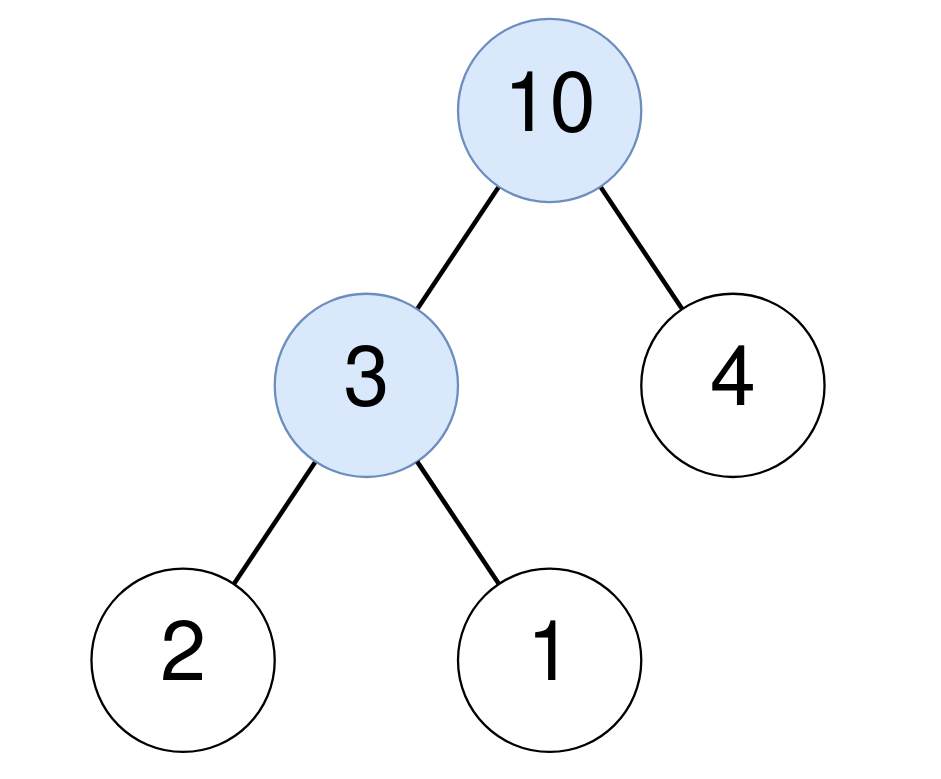
输入: root = [10,3,4,2,1]
输出: 2
解释:
对于值为10的节点: 其子节点之和为: 3+4+2+1 = 10。
对于值为3的节点:其子节点之和为: 2+1 = 3。
示例 2:
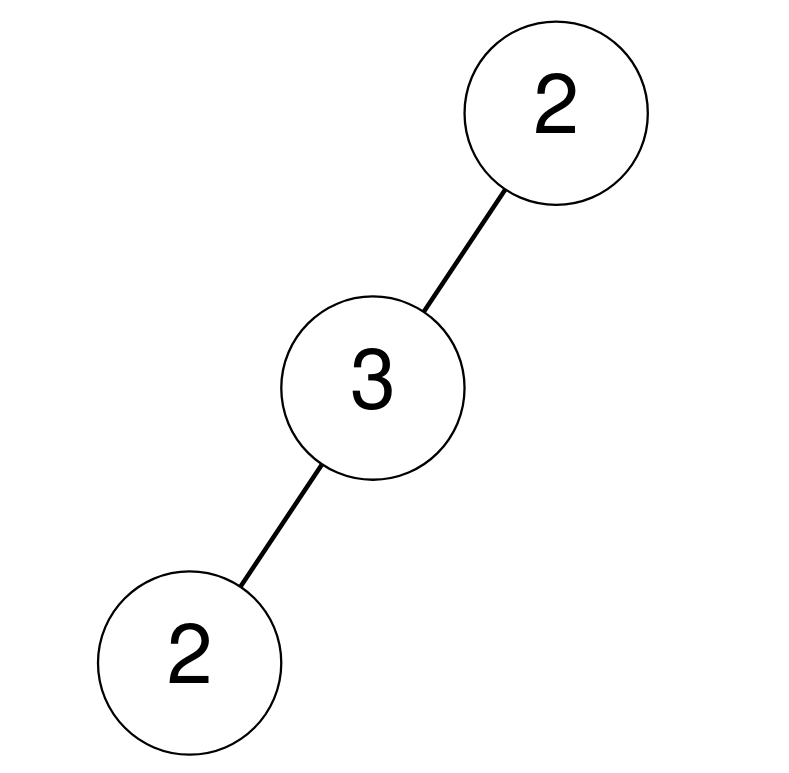
输入: root = [2,3,null,2,null]
输出: 0
解释:
没有节点满足其值等于子节点之和。
示例 3:
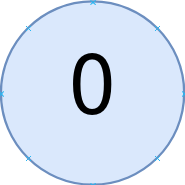
输入: root = [0]
输出: 1
解释:
对于值为0的节点:因为它没有子节点,所以自己点之和为0。
提示:
树中节点的数量范围: [1, 105 ] 0 <= Node.val <= 105 解法 方法一:递归 思考
每个结点要与其全部子孙之和比较。若对每个结点再遍历子树,总时间为平方级。
一次后序 DFS 返回子树和:左右之和等于结点值则计数加一,并向上返回「自身加左右」。整树一遍即可。
我们设计一个函数 \(dfs(root)\) ,该函数返回以 \(root\) 为根节点的子树的所有节点值之和。函数 \(dfs(root)\) 的执行过程如下:
如果 \(root\) 为空,返回 \(0\) ; 否则,我们递归地计算 \(root\) 的左子树和右子树的节点值之和,记为 \(l\) 和 \(r\) ;如果 \(l + r = root.val\) ,说明以 \(root\) 为根节点的子树满足条件,我们将答案加 \(1\) ;最后,返回 \(root.val + l + r\) 。 然后我们调用函数 \(dfs(root)\) ,返回答案即可。
时间复杂度 \(O(n)\) ,空间复杂度 \(O(n)\) 。其中 \(n\) 是二叉树的节点数。
Python3 Java C++ Go
 1
 2
 3
 4
 5
 6
 7
 8
 9
10
11
12
13
14
15
16
17
18
19
20
# Definition for a binary tree node.
# class TreeNode:
# def __init__(self, val=0, left=None, right=None):
# self.val = val
# self.left = left
# self.right = right
class Solution :
def equalToDescendants ( self , root : Optional [ TreeNode ]) -> int :
def dfs ( root ):
if root is None :
return 0
l , r = dfs ( root . left ), dfs ( root . right )
if l + r == root . val :
nonlocal ans
ans += 1
return root . val + l + r
ans = 0
dfs ( root )
return ans
 1
 2
 3
 4
 5
 6
 7
 8
 9
10
11
12
13
14
15
16
17
18
19
20
21
22
23
24
25
26
27
28
29
30
31
32
33
34
35
/**
* Definition for a binary tree node.
* public class TreeNode {
* int val;
* TreeNode left;
* TreeNode right;
* TreeNode() {}
* TreeNode(int val) { this.val = val; }
* TreeNode(int val, TreeNode left, TreeNode right) {
* this.val = val;
* this.left = left;
* this.right = right;
* }
* }
*/
class Solution {
private int ans ;
public int equalToDescendants ( TreeNode root ) {
dfs ( root );
return ans ;
}
private int dfs ( TreeNode root ) {
if ( root == null ) {
return 0 ;
}
int l = dfs ( root . left );
int r = dfs ( root . right );
if ( l + r == root . val ) {
++ ans ;
}
return root . val + l + r ;
}
}
 1
 2
 3
 4
 5
 6
 7
 8
 9
10
11
12
13
14
15
16
17
18
19
20
21
22
23
24
25
26
27
28
/**
* Definition for a binary tree node.
* struct TreeNode {
* int val;
* TreeNode *left;
* TreeNode *right;
* TreeNode() : val(0), left(nullptr), right(nullptr) {}
* TreeNode(int x) : val(x), left(nullptr), right(nullptr) {}
* TreeNode(int x, TreeNode *left, TreeNode *right) : val(x), left(left), right(right) {}
* };
*/
class Solution {
public :
int equalToDescendants ( TreeNode * root ) {
int ans = 0 ;
function < long long ( TreeNode * ) > dfs = [ & ]( TreeNode * root ) -> long long {
if ( ! root ) {
return 0 ;
}
auto l = dfs ( root -> left );
auto r = dfs ( root -> right );
ans += l + r == root -> val ;
return root -> val + l + r ;
};
dfs ( root );
return ans ;
}
};
 1
 2
 3
 4
 5
 6
 7
 8
 9
10
11
12
13
14
15
16
17
18
19
20
21
22
23
/**
* Definition for a binary tree node.
* type TreeNode struct {
* Val int
* Left *TreeNode
* Right *TreeNode
* }
*/
func equalToDescendants ( root * TreeNode ) ( ans int ) {
var dfs func ( * TreeNode ) int
dfs = func ( root * TreeNode ) int {
if root == nil {
return 0
}
l , r := dfs ( root . Left ), dfs ( root . Right )
if l + r == root . Val {
ans ++
}
return root . Val + l + r
}
dfs ( root )
return
}
方法二:显式栈 思考
每个结点要和它全部子孙的值之和比较。若对每个结点再单独遍历子树,总时间是平方级。后序遍历在离开结点时已经知道左右子树的和,一次遍历就能判断并向上汇总。
\(n\) 可以到 \(10^5\) 。后序先走进左孩子,一条左链会让递归在子树和算完之前溢出。结点值最大 \(10^5\) ,整棵子树的和可以到 \(10^{10}\) ,32 位整数装不下。
子孙和只在左右子树都处理完之后才知道。显式栈用状态把“先展开孩子”和“孩子都已返回”分开,弹出完成标记时读取左右子树和。和数用 64 位整数保存,左右之和等于结点值就计数,再把自身加进去交给父结点。
每个结点入栈一次。空孩子的和视为 \(0\) 。
我们用显式栈做后序遍历。栈中每个元素是结点和状态:状态 \(0\) 先压入完成标记,再压入右孩子和左孩子;状态 \(1\) 表示左右子树都已求出子树和。弹出完成标记后,取出左子树和 \(l\) 与右子树和 \(r\) 。若 \(l + r = \textit{val}\) ,答案加一。该结点的子树和为 \(\textit{val} + l + r\) ,存下来给父结点使用。空孩子的和为 \(0\) 。子树和用 64 位整数,\(n\) 个不超过 \(10^5\) 的结点相加不会溢出。
时间复杂度 \(O(n)\) ,空间复杂度 \(O(n)\) 。其中 \(n\) 是二叉树的节点数。
Python3 Java C++ Go
 1
 2
 3
 4
 5
 6
 7
 8
 9
10
11
12
13
14
15
16
17
18
19
20
21
22
23
24
25
26
27
28
# Definition for a binary tree node.
# class TreeNode:
# def __init__(self, val=0, left=None, right=None):
# self.val = val
# self.left = left
# self.right = right
class Solution :
def equalToDescendants ( self , root : Optional [ TreeNode ]) -> int :
ans = 0
stk = [( root , 0 )]
sub = {}
while stk :
node , state = stk . pop ()
if node is None :
continue
if state == 0 :
stk . append (( node , 1 ))
if node . right is not None :
stk . append (( node . right , 0 ))
if node . left is not None :
stk . append (( node . left , 0 ))
continue
l = sub [ id ( node . left )] if node . left is not None else 0
r = sub [ id ( node . right )] if node . right is not None else 0
if l + r == node . val :
ans += 1
sub [ id ( node )] = node . val + l + r
return ans
 1
 2
 3
 4
 5
 6
 7
 8
 9
10
11
12
13
14
15
16
17
18
19
20
21
22
23
24
25
26
27
28
29
30
31
32
33
34
35
36
37
38
39
40
41
42
43
44
45
46
47
48
49
50
51
52
53
54
55
56
/**
* Definition for a binary tree node.
* public class TreeNode {
* int val;
* TreeNode left;
* TreeNode right;
* TreeNode() {}
* TreeNode(int val) { this.val = val; }
* TreeNode(int val, TreeNode left, TreeNode right) {
* this.val = val;
* this.left = left;
* this.right = right;
* }
* }
*/
class Solution {
private static class Frame {
TreeNode node ;
int state ;
Frame ( TreeNode node , int state ) {
this . node = node ;
this . state = state ;
}
}
public int equalToDescendants ( TreeNode root ) {
int ans = 0 ;
Map < TreeNode , Long > sub = new IdentityHashMap <> ();
Deque < Frame > stk = new ArrayDeque <> ();
if ( root != null ) {
stk . push ( new Frame ( root , 0 ));
}
while ( ! stk . isEmpty ()) {
Frame cur = stk . pop ();
TreeNode node = cur . node ;
if ( cur . state == 0 ) {
stk . push ( new Frame ( node , 1 ));
if ( node . right != null ) {
stk . push ( new Frame ( node . right , 0 ));
}
if ( node . left != null ) {
stk . push ( new Frame ( node . left , 0 ));
}
continue ;
}
long l = node . left == null ? 0 : sub . get ( node . left );
long r = node . right == null ? 0 : sub . get ( node . right );
if ( l + r == node . val ) {
++ ans ;
}
sub . put ( node , node . val + l + r );
}
return ans ;
}
}
 1
 2
 3
 4
 5
 6
 7
 8
 9
10
11
12
13
14
15
16
17
18
19
20
21
22
23
24
25
26
27
28
29
30
31
32
33
34
35
36
37
38
39
40
41
/**
* Definition for a binary tree node.
* struct TreeNode {
* int val;
* TreeNode *left;
* TreeNode *right;
* TreeNode() : val(0), left(nullptr), right(nullptr) {}
* TreeNode(int x) : val(x), left(nullptr), right(nullptr) {}
* TreeNode(int x, TreeNode *left, TreeNode *right) : val(x), left(left), right(right) {}
* };
*/
class Solution {
public :
int equalToDescendants ( TreeNode * root ) {
int ans = 0 ;
unordered_map < TreeNode * , long long > sub ;
vector < pair < TreeNode * , int >> stk ;
if ( root ) {
stk . emplace_back ( root , 0 );
}
while ( ! stk . empty ()) {
auto [ node , state ] = stk . back ();
stk . pop_back ();
if ( state == 0 ) {
stk . emplace_back ( node , 1 );
if ( node -> right ) {
stk . emplace_back ( node -> right , 0 );
}
if ( node -> left ) {
stk . emplace_back ( node -> left , 0 );
}
continue ;
}
long long l = node -> left ? sub [ node -> left ] : 0 ;
long long r = node -> right ? sub [ node -> right ] : 0 ;
ans += l + r == node -> val ;
sub [ node ] = node -> val + l + r ;
}
return ans ;
}
};
 1
 2
 3
 4
 5
 6
 7
 8
 9
10
11
12
13
14
15
16
17
18
19
20
21
22
23
24
25
26
27
28
29
30
31
32
33
34
35
36
37
38
39
40
41
42
43
44
45
46
/**
* Definition for a binary tree node.
* type TreeNode struct {
* Val int
* Left *TreeNode
* Right *TreeNode
* }
*/
func equalToDescendants ( root * TreeNode ) ( ans int ) {
sub := map [ * TreeNode ] int {}
type frame struct {
node * TreeNode
state int
}
stk := [] frame {}
if root != nil {
stk = append ( stk , frame { root , 0 })
}
for len ( stk ) > 0 {
cur := stk [ len ( stk ) - 1 ]
stk = stk [: len ( stk ) - 1 ]
node := cur . node
if cur . state == 0 {
stk = append ( stk , frame { node , 1 })
if node . Right != nil {
stk = append ( stk , frame { node . Right , 0 })
}
if node . Left != nil {
stk = append ( stk , frame { node . Left , 0 })
}
continue
}
l , r := 0 , 0
if node . Left != nil {
l = sub [ node . Left ]
}
if node . Right != nil {
r = sub [ node . Right ]
}
if l + r == node . Val {
ans ++
}
sub [ node ] = node . Val + l + r
}
return
}
GitHub