Skip to content

2385. Amount of Time for Binary Tree to Be Infected

SourceWeekly Contest 307 Q3DifficultyMediumRating1711

Description

You are given the root of a binary tree with unique values, and an integer start. At minute 0, an infection starts from the node with value start.

Each minute, a node becomes infected if:

  • The node is currently uninfected.
  • The node is adjacent to an infected node.

Return the number of minutes needed for the entire tree to be infected.


Example 1:

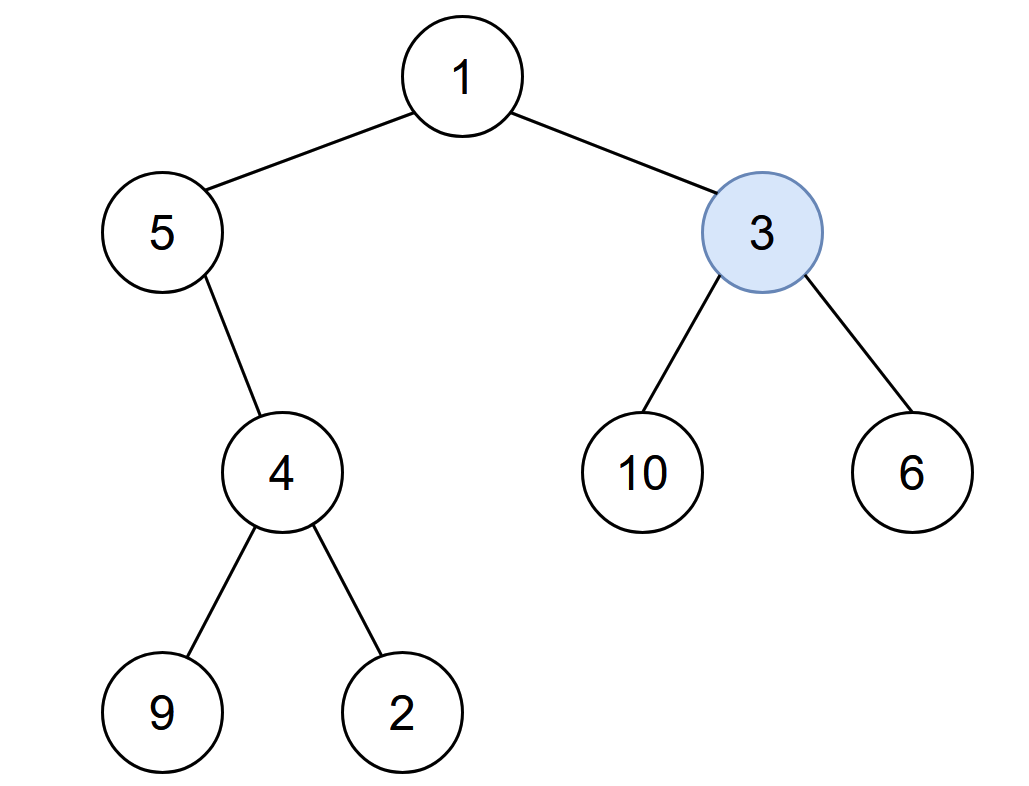
Input: root = [1,5,3,null,4,10,6,9,2], start = 3
Output: 4
Explanation: The following nodes are infected during:
- Minute 0: Node 3
- Minute 1: Nodes 1, 10 and 6
- Minute 2: Node 5
- Minute 3: Node 4
- Minute 4: Nodes 9 and 2
It takes 4 minutes for the whole tree to be infected so we return 4.

Example 2:

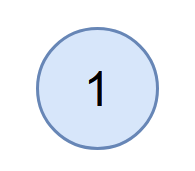
Input: root = [1], start = 1
Output: 0
Explanation: At minute 0, the only node in the tree is infected so we return 0.


Constraints:

  • The number of nodes in the tree is in the range [1, 105].
  • 1 <= Node.val <= 105
  • Each node has a unique value.
  • A node with a value of start exists in the tree.

Solutions

Solution 1: Two DFS

Thinking

Infection travels along tree edges; the time is the eccentricity of \(start\). Up to \(10^5\) nodes, so parent links must be explicit.

The first DFS builds an undirected adjacency list; the second DFS from \(start\) returns the farthest depth. Both are linear.

First, we build a graph through one DFS, and get an adjacency list \(g\), where \(g[node]\) represents all nodes connected to the node \(node\).

Then, we use \(start\) as the starting point, and search the entire tree through DFS to find the farthest distance, which is the answer.

The time complexity is \(O(n)\), and the space complexity is \(O(n)\), where \(n\) is the number of nodes in the binary tree.

 1
 2
 3
 4
 5
 6
 7
 8
 9
10
11
12
13
14
15
16
17
18
19
20
21
22
23
24
25
26
27
# Definition for a binary tree node.
# class TreeNode:
#     def __init__(self, val=0, left=None, right=None):
#         self.val = val
#         self.left = left
#         self.right = right
class Solution:
    def amountOfTime(self, root: Optional[TreeNode], start: int) -> int:
        def dfs(node: Optional[TreeNode], fa: Optional[TreeNode]):
            if node is None:
                return
            if fa:
                g[node.val].append(fa.val)
                g[fa.val].append(node.val)
            dfs(node.left, node)
            dfs(node.right, node)

        def dfs2(node: int, fa: int) -> int:
            ans = 0
            for nxt in g[node]:
                if nxt != fa:
                    ans = max(ans, 1 + dfs2(nxt, node))
            return ans

        g = defaultdict(list)
        dfs(root, None)
        return dfs2(start, -1)
 1
 2
 3
 4
 5
 6
 7
 8
 9
10
11
12
13
14
15
16
17
18
19
20
21
22
23
24
25
26
27
28
29
30
31
32
33
34
35
36
37
38
39
40
41
42
43
44
45
/**
 * Definition for a binary tree node.
 * public class TreeNode {
 *     int val;
 *     TreeNode left;
 *     TreeNode right;
 *     TreeNode() {}
 *     TreeNode(int val) { this.val = val; }
 *     TreeNode(int val, TreeNode left, TreeNode right) {
 *         this.val = val;
 *         this.left = left;
 *         this.right = right;
 *     }
 * }
 */
class Solution {
    private Map<Integer, List<Integer>> g = new HashMap<>();

    public int amountOfTime(TreeNode root, int start) {
        dfs(root, null);
        return dfs2(start, -1);
    }

    private void dfs(TreeNode node, TreeNode fa) {
        if (node == null) {
            return;
        }
        if (fa != null) {
            g.computeIfAbsent(node.val, k -> new ArrayList<>()).add(fa.val);
            g.computeIfAbsent(fa.val, k -> new ArrayList<>()).add(node.val);
        }
        dfs(node.left, node);
        dfs(node.right, node);
    }

    private int dfs2(int node, int fa) {
        int ans = 0;
        for (int nxt : g.getOrDefault(node, List.of())) {
            if (nxt != fa) {
                ans = Math.max(ans, 1 + dfs2(nxt, node));
            }
        }
        return ans;
    }
}
 1
 2
 3
 4
 5
 6
 7
 8
 9
10
11
12
13
14
15
16
17
18
19
20
21
22
23
24
25
26
27
28
29
30
31
32
33
34
35
36
37
38
39
/**
 * Definition for a binary tree node.
 * struct TreeNode {
 *     int val;
 *     TreeNode *left;
 *     TreeNode *right;
 *     TreeNode() : val(0), left(nullptr), right(nullptr) {}
 *     TreeNode(int x) : val(x), left(nullptr), right(nullptr) {}
 *     TreeNode(int x, TreeNode *left, TreeNode *right) : val(x), left(left), right(right) {}
 * };
 */
class Solution {
public:
    int amountOfTime(TreeNode* root, int start) {
        unordered_map<int, vector<int>> g;
        function<void(TreeNode*, TreeNode*)> dfs = [&](TreeNode* node, TreeNode* fa) {
            if (!node) {
                return;
            }
            if (fa) {
                g[node->val].push_back(fa->val);
                g[fa->val].push_back(node->val);
            }
            dfs(node->left, node);
            dfs(node->right, node);
        };
        function<int(int, int)> dfs2 = [&](int node, int fa) -> int {
            int ans = 0;
            for (int nxt : g[node]) {
                if (nxt != fa) {
                    ans = max(ans, 1 + dfs2(nxt, node));
                }
            }
            return ans;
        };
        dfs(root, nullptr);
        return dfs2(start, -1);
    }
};
 1
 2
 3
 4
 5
 6
 7
 8
 9
10
11
12
13
14
15
16
17
18
19
20
21
22
23
24
25
26
27
28
29
30
31
32
33
34
/**
 * Definition for a binary tree node.
 * type TreeNode struct {
 *     Val int
 *     Left *TreeNode
 *     Right *TreeNode
 * }
 */
func amountOfTime(root *TreeNode, start int) int {
    g := map[int][]int{}
    var dfs func(*TreeNode, *TreeNode)
    dfs = func(node, fa *TreeNode) {
        if node == nil {
            return
        }
        if fa != nil {
            g[node.Val] = append(g[node.Val], fa.Val)
            g[fa.Val] = append(g[fa.Val], node.Val)
        }
        dfs(node.Left, node)
        dfs(node.Right, node)
    }
    var dfs2 func(int, int) int
    dfs2 = func(node, fa int) (ans int) {
        for _, nxt := range g[node] {
            if nxt != fa {
                ans = max(ans, 1+dfs2(nxt, node))
            }
        }
        return
    }
    dfs(root, nil)
    return dfs2(start, -1)
}
 1
 2
 3
 4
 5
 6
 7
 8
 9
10
11
12
13
14
15
16
17
18
19
20
21
22
23
24
25
26
27
28
29
30
31
32
33
34
35
36
37
38
39
40
41
42
43
44
45
/**
 * Definition for a binary tree node.
 * class TreeNode {
 *     val: number
 *     left: TreeNode | null
 *     right: TreeNode | null
 *     constructor(val?: number, left?: TreeNode | null, right?: TreeNode | null) {
 *         this.val = (val===undefined ? 0 : val)
 *         this.left = (left===undefined ? null : left)
 *         this.right = (right===undefined ? null : right)
 *     }
 * }
 */

function amountOfTime(root: TreeNode | null, start: number): number {
    const g: Map<number, number[]> = new Map();
    const dfs = (node: TreeNode | null, fa: TreeNode | null) => {
        if (!node) {
            return;
        }
        if (fa) {
            if (!g.has(node.val)) {
                g.set(node.val, []);
            }
            g.get(node.val)!.push(fa.val);
            if (!g.has(fa.val)) {
                g.set(fa.val, []);
            }
            g.get(fa.val)!.push(node.val);
        }
        dfs(node.left, node);
        dfs(node.right, node);
    };
    const dfs2 = (node: number, fa: number): number => {
        let ans = 0;
        for (const nxt of g.get(node) || []) {
            if (nxt !== fa) {
                ans = Math.max(ans, 1 + dfs2(nxt, node));
            }
        }
        return ans;
    };
    dfs(root, null);
    return dfs2(start, -1);
}

Solution 2: Explicit Stack

Thinking

Infection spreads along parent and child edges, so the minutes needed are the farthest distance from \(start\). Recording those edges and then returning a depth is correct on a short tree.

The tree can contain \(10^5\) nodes. A left chain makes both walks recurse once per node, which exceeds the call stack.

Each walk only needs the current node and its parent, and a node's depth is one plus the maximum depth of its other neighbors. Those values can sit beside an explicit stack.

The first stack records every parent edge in an undirected adjacency list, using the distinct node values as keys. The second stack enters a node, pushes its neighbors, and on exit writes one plus the maximum neighbor depth. The depth stored for \(start\) is the answer.

We traverse the binary tree with an explicit stack and record each parent-child edge in an undirected adjacency list \(g\). Node values are distinct, so they are the graph keys.

A second explicit stack then walks outward from \(start\). On entry it pushes an exit marker and every neighbor except the parent; on exit the depth is one plus the maximum depth of those neighbors. The depth stored for \(start\) is the answer.

The time complexity is \(O(n)\), and the space complexity is \(O(n)\), where \(n\) is the number of nodes in the binary tree.

 1
 2
 3
 4
 5
 6
 7
 8
 9
10
11
12
13
14
15
16
17
18
19
20
21
22
23
24
25
26
27
28
29
30
31
32
33
34
35
36
37
# Definition for a binary tree node.
# class TreeNode:
#     def __init__(self, val=0, left=None, right=None):
#         self.val = val
#         self.left = left
#         self.right = right
class Solution:
    def amountOfTime(self, root: Optional[TreeNode], start: int) -> int:
        g = defaultdict(list)
        stk = [(root, None)]
        while stk:
            node, fa = stk.pop()
            if node is None:
                continue
            if fa:
                g[node.val].append(fa.val)
                g[fa.val].append(node.val)
            stk.append((node.right, node))
            stk.append((node.left, node))

        dist = {}
        walk = [(start, -1, 0)]
        while walk:
            node, fa, state = walk.pop()
            nxts = g[node]
            if state == 0:
                walk.append((node, fa, 1))
                for nxt in reversed(nxts):
                    if nxt != fa:
                        walk.append((nxt, node, 0))
                continue
            best = 0
            for nxt in nxts:
                if nxt != fa:
                    best = max(best, 1 + dist[nxt])
            dist[node] = best
        return dist[start]
 1
 2
 3
 4
 5
 6
 7
 8
 9
10
11
12
13
14
15
16
17
18
19
20
21
22
23
24
25
26
27
28
29
30
31
32
33
34
35
36
37
38
39
40
41
42
43
44
45
46
47
48
49
50
51
52
53
54
55
56
57
58
59
60
61
62
63
64
65
66
67
68
69
70
71
72
73
74
75
/**
 * Definition for a binary tree node.
 * public class TreeNode {
 *     int val;
 *     TreeNode left;
 *     TreeNode right;
 *     TreeNode() {}
 *     TreeNode(int val) { this.val = val; }
 *     TreeNode(int val, TreeNode left, TreeNode right) {
 *         this.val = val;
 *         this.left = left;
 *         this.right = right;
 *     }
 * }
 */
class Solution {
    private static class Frame {
        TreeNode node;
        TreeNode fa;

        Frame(TreeNode node, TreeNode fa) {
            this.node = node;
            this.fa = fa;
        }
    }

    public int amountOfTime(TreeNode root, int start) {
        Map<Integer, List<Integer>> g = new HashMap<>();
        Deque<Frame> stk = new ArrayDeque<>();
        if (root != null) {
            stk.push(new Frame(root, null));
        }
        while (!stk.isEmpty()) {
            Frame cur = stk.pop();
            TreeNode node = cur.node;
            TreeNode fa = cur.fa;
            if (fa != null) {
                g.computeIfAbsent(node.val, k -> new ArrayList<>()).add(fa.val);
                g.computeIfAbsent(fa.val, k -> new ArrayList<>()).add(node.val);
            }
            if (node.right != null) {
                stk.push(new Frame(node.right, node));
            }
            if (node.left != null) {
                stk.push(new Frame(node.left, node));
            }
        }
        Map<Integer, Integer> dist = new HashMap<>();
        Deque<int[]> walk = new ArrayDeque<>();
        walk.push(new int[] {start, -1, 0});
        while (!walk.isEmpty()) {
            int[] cur = walk.pop();
            int node = cur[0], fa = cur[1], state = cur[2];
            List<Integer> nxts = g.getOrDefault(node, List.of());
            if (state == 0) {
                walk.push(new int[] {node, fa, 1});
                for (int i = nxts.size() - 1; i >= 0; --i) {
                    int nxt = nxts.get(i);
                    if (nxt != fa) {
                        walk.push(new int[] {nxt, node, 0});
                    }
                }
            } else {
                int best = 0;
                for (int nxt : nxts) {
                    if (nxt != fa) {
                        best = Math.max(best, 1 + dist.get(nxt));
                    }
                }
                dist.put(node, best);
            }
        }
        return dist.get(start);
    }
}
 1
 2
 3
 4
 5
 6
 7
 8
 9
10
11
12
13
14
15
16
17
18
19
20
21
22
23
24
25
26
27
28
29
30
31
32
33
34
35
36
37
38
39
40
41
42
43
44
45
46
47
48
49
50
51
52
53
54
55
56
/**
 * Definition for a binary tree node.
 * struct TreeNode {
 *     int val;
 *     TreeNode *left;
 *     TreeNode *right;
 *     TreeNode() : val(0), left(nullptr), right(nullptr) {}
 *     TreeNode(int x) : val(x), left(nullptr), right(nullptr) {}
 *     TreeNode(int x, TreeNode *left, TreeNode *right) : val(x), left(left), right(right) {}
 * };
 */
class Solution {
public:
    int amountOfTime(TreeNode* root, int start) {
        unordered_map<int, vector<int>> g;
        vector<pair<TreeNode*, TreeNode*>> stk{{root, nullptr}};
        while (!stk.empty()) {
            auto [node, fa] = stk.back();
            stk.pop_back();
            if (!node) {
                continue;
            }
            if (fa) {
                g[node->val].push_back(fa->val);
                g[fa->val].push_back(node->val);
            }
            stk.emplace_back(node->right, node);
            stk.emplace_back(node->left, node);
        }
        unordered_map<int, int> dist;
        vector<tuple<int, int, int>> walk{{start, -1, 0}};
        while (!walk.empty()) {
            auto [node, fa, state] = walk.back();
            walk.pop_back();
            auto& nxts = g[node];
            if (state == 0) {
                walk.emplace_back(node, fa, 1);
                for (int i = (int) nxts.size() - 1; i >= 0; --i) {
                    int nxt = nxts[i];
                    if (nxt != fa) {
                        walk.emplace_back(nxt, node, 0);
                    }
                }
            } else {
                int best = 0;
                for (int nxt : nxts) {
                    if (nxt != fa) {
                        best = max(best, 1 + dist[nxt]);
                    }
                }
                dist[node] = best;
            }
        }
        return dist[start];
    }
};
 1
 2
 3
 4
 5
 6
 7
 8
 9
10
11
12
13
14
15
16
17
18
19
20
21
22
23
24
25
26
27
28
29
30
31
32
33
34
35
36
37
38
39
40
41
42
43
44
45
46
47
48
49
50
51
52
53
54
55
56
/**
 * Definition for a binary tree node.
 * type TreeNode struct {
 *     Val int
 *     Left *TreeNode
 *     Right *TreeNode
 * }
 */
func amountOfTime(root *TreeNode, start int) int {
    g := map[int][]int{}
    type frame struct {
        node, fa *TreeNode
    }
    stk := []frame{{root, nil}}
    for len(stk) > 0 {
        cur := stk[len(stk)-1]
        stk = stk[:len(stk)-1]
        node, fa := cur.node, cur.fa
        if node == nil {
            continue
        }
        if fa != nil {
            g[node.Val] = append(g[node.Val], fa.Val)
            g[fa.Val] = append(g[fa.Val], node.Val)
        }
        stk = append(stk, frame{node.Right, node}, frame{node.Left, node})
    }
    dist := map[int]int{}
    type step struct {
        node, fa, state int
    }
    walk := []step{{start, -1, 0}}
    for len(walk) > 0 {
        cur := walk[len(walk)-1]
        walk = walk[:len(walk)-1]
        node, fa, state := cur.node, cur.fa, cur.state
        nxts := g[node]
        if state == 0 {
            walk = append(walk, step{node, fa, 1})
            for i := len(nxts) - 1; i >= 0; i-- {
                if nxt := nxts[i]; nxt != fa {
                    walk = append(walk, step{nxt, node, 0})
                }
            }
            continue
        }
        best := 0
        for _, nxt := range nxts {
            if nxt != fa {
                best = max(best, 1+dist[nxt])
            }
        }
        dist[node] = best
    }
    return dist[start]
}
 1
 2
 3
 4
 5
 6
 7
 8
 9
10
11
12
13
14
15
16
17
18
19
20
21
22
23
24
25
26
27
28
29
30
31
32
33
34
35
36
37
38
39
40
41
42
43
44
45
46
47
48
49
50
51
52
53
54
55
56
57
58
59
60
/**
 * Definition for a binary tree node.
 * class TreeNode {
 *     val: number
 *     left: TreeNode | null
 *     right: TreeNode | null
 *     constructor(val?: number, left?: TreeNode | null, right?: TreeNode | null) {
 *         this.val = (val===undefined ? 0 : val)
 *         this.left = (left===undefined ? null : left)
 *         this.right = (right===undefined ? null : right)
 *     }
 * }
 */

function amountOfTime(root: TreeNode | null, start: number): number {
    const g: Map<number, number[]> = new Map();
    const stk: [TreeNode | null, TreeNode | null][] = [[root, null]];
    while (stk.length) {
        const [node, fa] = stk.pop()!;
        if (!node) {
            continue;
        }
        if (fa) {
            if (!g.has(node.val)) {
                g.set(node.val, []);
            }
            g.get(node.val)!.push(fa.val);
            if (!g.has(fa.val)) {
                g.set(fa.val, []);
            }
            g.get(fa.val)!.push(node.val);
        }
        stk.push([node.right, node]);
        stk.push([node.left, node]);
    }
    const dist = new Map<number, number>();
    const walk: [number, number, number][] = [[start, -1, 0]];
    while (walk.length) {
        const [node, fa, state] = walk.pop()!;
        const nxts = g.get(node) || [];
        if (state === 0) {
            walk.push([node, fa, 1]);
            for (let i = nxts.length - 1; i >= 0; --i) {
                const nxt = nxts[i];
                if (nxt !== fa) {
                    walk.push([nxt, node, 0]);
                }
            }
            continue;
        }
        let best = 0;
        for (const nxt of nxts) {
            if (nxt !== fa) {
                best = Math.max(best, 1 + dist.get(nxt)!);
            }
        }
        dist.set(node, best);
    }
    return dist.get(start)!;
}

Comments